Languages at the heart of decision-making:
Linguists in the Council of the EU
Where do linguists fit within the institutional structure of the Council of the European Union explored in the previous post? Do they serve only one institution, or the EU system as a whole? In reality, their work is transversal. Linguists support the Council, the European Council, and often collaborate closely with the European Parliament and the European Commission. Multilingualism is not an accessory feature of the EU; it is a structural necessity.
The General Secretariat: the linguistic backbone
Within the Council, linguistic and legal-linguistic work is coordinated by the General Secretariat of the Council (GSC). The GSC assists both the European Council and the Council of the EU, including their rotating presidencies, the Committee of Permanent Representatives (COREPER), and the many committees and working parties involved in legislative negotiations. Beyond political and technical discussions, an essential layer of work ensures the legal and linguistic refinement of legislative texts.
The role of lawyer-linguists
The Council’s Legal Service convenes meetings of lawyer-linguists to finalise the legal-linguistic version of draft acts. These meetings bring together representatives of the three co-legislators: typically two lawyer-linguists from the European Parliament, representatives of the European Commission, and the Council’s lawyer-linguists for each official language, alongside policy administrators and legal advisers. The meetings are chaired by a Council lawyer-linguist. At this stage, the text is examined line by line to ensure legal soundness, coherence, and linguistic precision. The agreed version becomes the reference for all other language versions. Every term matters, as even small nuances can affect interpretation across the Union. The challenge is to guarantee equivalent meaning and legal effect in all official languages. Once revised and translated into the EU’s 24 official languages, delegations can work in their own language. Crucially, all versions of EU legislation are equally authentic; no single language prevails legally over another.
Translation as an engine of legislation
Language professionals represent about 27% of the General Secretariat’s staff. Each year, they manage between 12,000 and 15,000 translation requests and produce around 1.3 million pages. The pace is intense, as negotiations evolve quickly and deadlines are tight. Precision, consistency with previous acts, and alignment across languages are essential. If translation slows, legislation slows. Multilingualism is therefore not only a political principle but a functional requirement: the legislative machine depends on the linguistic machine.
Interpretation: shared services across institutions
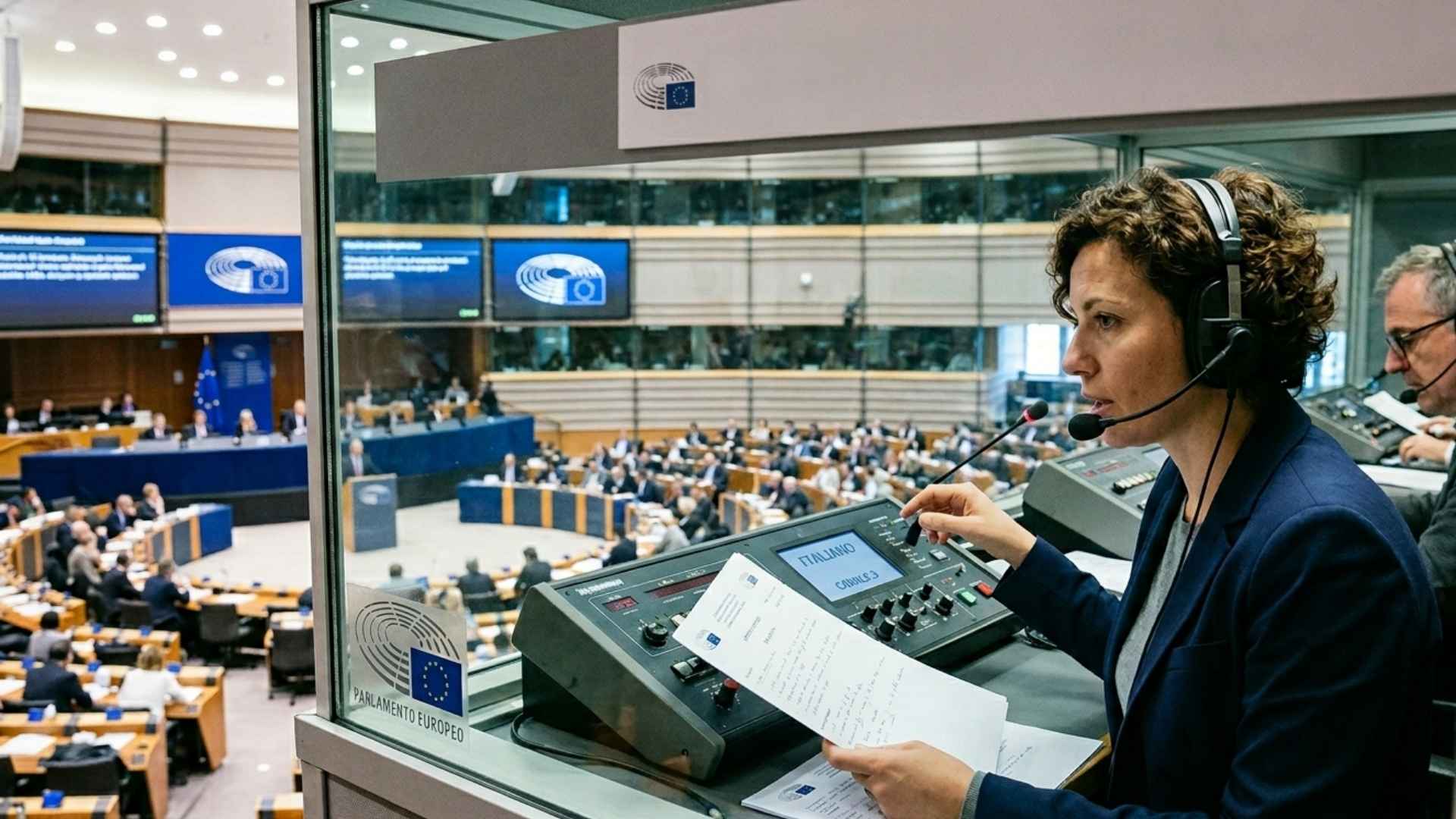
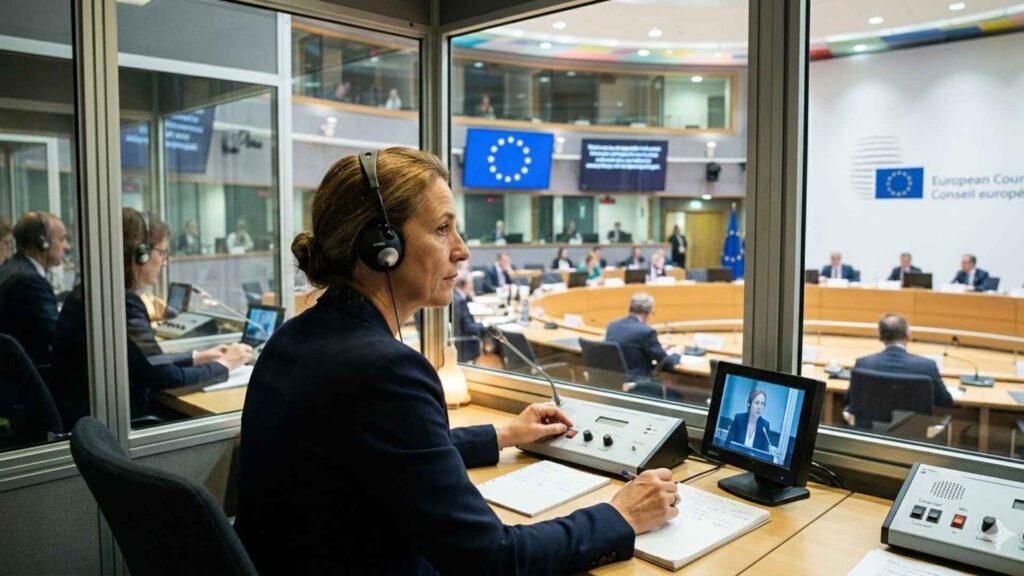
Interpretation for meetings of the Council and the European Council is often provided by the European Commission’s Directorate-General for Interpretation, illustrating strong interinstitutional cooperation. Language services are interconnected and mutually supportive. Linguists contribute not only to clarity of communication, but to the very possibility of negotiation among Member States. For students of linguistic mediation, the Council of the European Union offers a powerful example of how language expertise directly shapes law, policy, and democratic participation. Would you like to work at the heart of multilingual Europe?