The Council of the European Union: where national governments negotiate Europe
To what extent are national governments involved in European decision-making? Who negotiates the legislative proposals of the European Commission? This is where the two EU co-legislators come into play: the Council of the European Union and the European Parliament. Both define their positions on a proposal and, once adopted, negotiations often continue in informal “trilogues” to reach a final compromise. Today, we focus on the Council of the European Union.
What is the Council of the European Union?
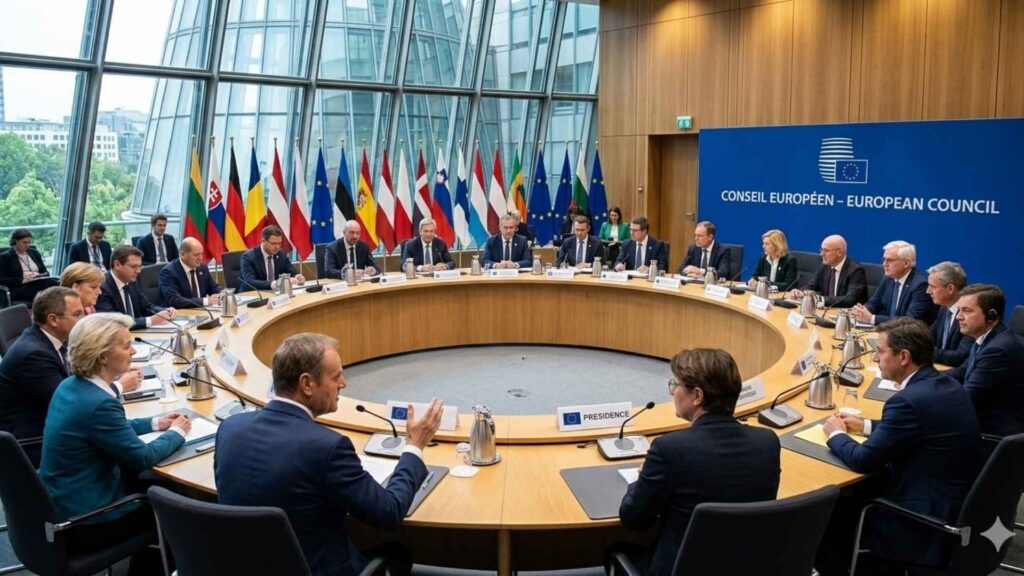
The Council of the EU, often simply called “the Council” (and not to be confused with the Council of Europe), represents the governments of the 27 Member States. It is the forum where national ministers meet to discuss, negotiate, amend, and adopt European legislation. The Council has no fixed composition; it meets in different “configurations” depending on the policy area. Agriculture ministers attend when farming is discussed, finance ministers when economic matters are on the agenda. In this way, each Member State is directly involved at ministerial level in shaping EU law.
How does the Council reach its position?
Before a minister votes in Brussels, a detailed preparatory process takes place. First, the Commission’s proposal is examined by specialised working parties composed of national experts, around 150 in total, each dealing with a specific policy field. At this stage, discussions focus mainly on technical and legal aspects. Second, the results are submitted to the ambassadors of the Member States within the Committee of Permanent Representatives (COREPER), where debates become more political and compromises are sought. Finally, the proposal is discussed and formally adopted during Council sessions attended by the 27 national ministers. The Council meets around 70 to 80 times per year in Brussels and, traditionally, also in Luxembourg during April, June, and October. Through this three-level structure of experts, ambassadors, and ministers, national governments remain continuously involved in European lawmaking.
Voting in the Council: how are decisions taken?
With 27 Member States around the table, reaching agreement is not always straightforward. Different voting procedures therefore apply depending on the policy area. In some cases, decisions are taken by simple majority, meaning at least 14 Member States must vote in favour. More commonly, the Council uses qualified majority voting, requiring at least 55% of Member States, representing at least 65% of the EU population. This “double majority” balances large and small countries. In particularly sensitive areas, such as EU accession, the long-term EU budget, taxation, or certain aspects of foreign and security policy, unanimity is required, meaning all Member States must agree.
National ministers at the heart of European lawmaking
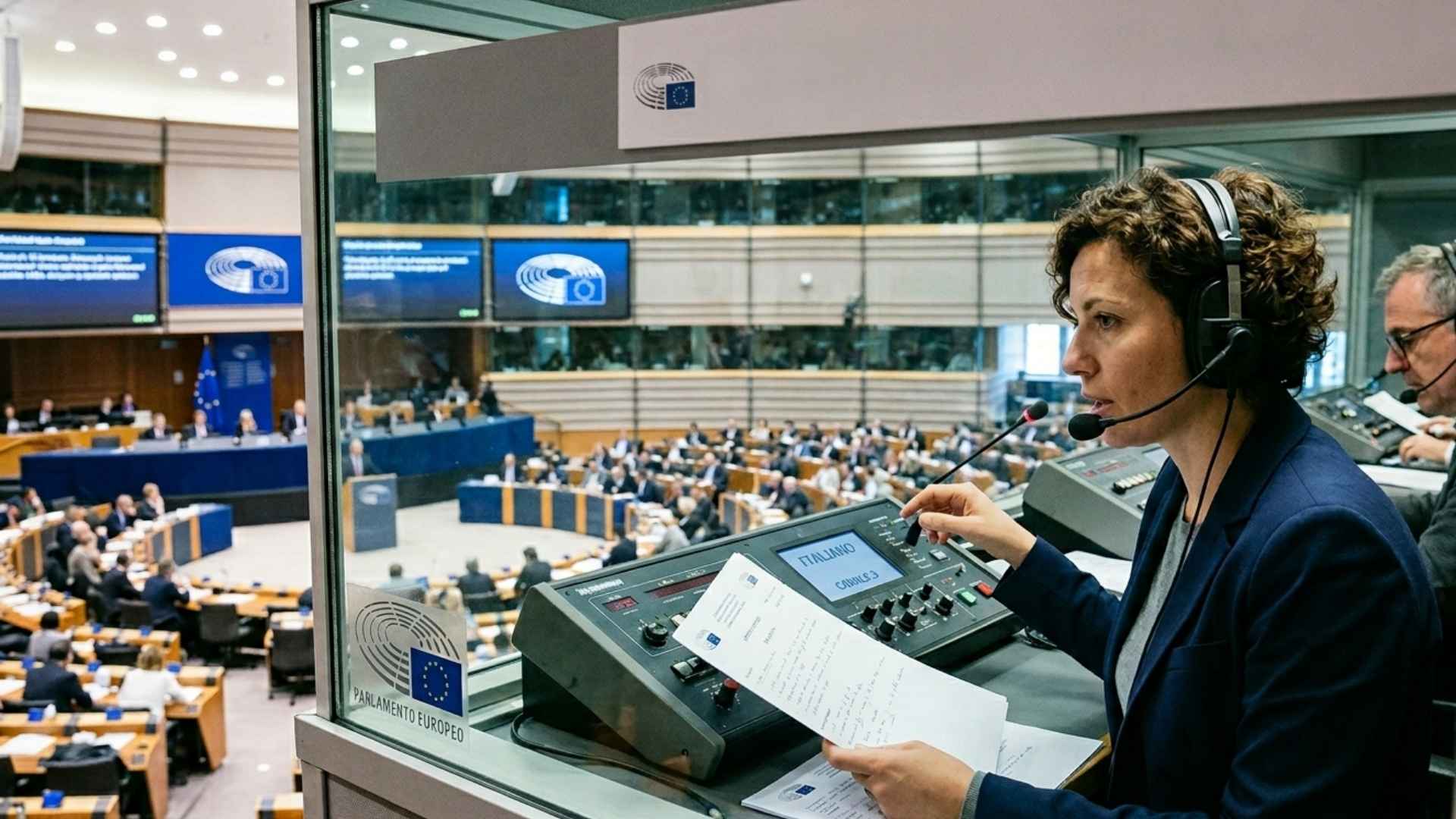
When we hear about a Council meeting in Brussels, we can better understand what is happening. National ministers are not only implementing domestic political programmes; throughout the year, they negotiate European legislation that will later apply at national level. They operate on two interconnected levels, shaping national law while cooperating with their counterparts to build common European solutions. The Council therefore shows that European legislation is not imposed from above but results from negotiations among democratically accountable governments working within a shared legal framework. In the next blog post, we will explore a less visible but essential dimension of the Council’s work: the linguistic and translation services that ensure every legislative text is equally valid in all official EU languages.